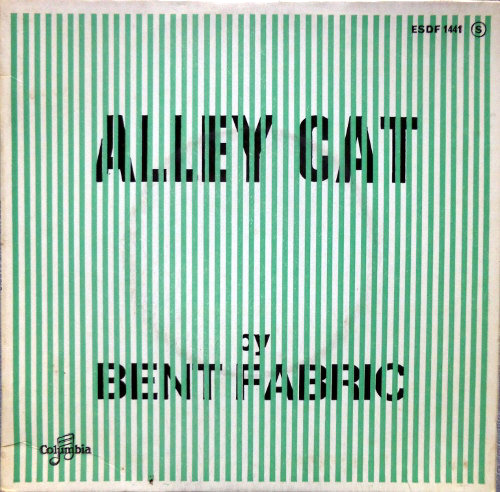
On the “Alley Cat” A-side of this single, Bent Fabric lays down a sinuous, slow-strutting line on the piano, with minimal drum and guitar backing lending it a nice jazz aura. “Markin’ Time”, the B-side, takes a similar approach but ups the drum presence and straightens out the piano-lines into a clear progression from point A to point B. Enjoyable on both fronts, but low on depth.
On their second studio album (though the entire second half is pulled from a concert in Japan), Weather Report play a flexible amalgam of jazz styles, moving from passages of bop to smooth interludes, cool counter-points, and splashes of world and folk, verging on free jazz at times, but keeping it firmly grounded with clear melodies throughout the runs. Embellishments come in the form of tone play, mutable fills, and stuttered reprises, and while the assortment of instruments regularly run off into protracted tangents, the performers do an impressive job of keeping the music just on the edge of splintering into dissonance before they bring it back under control.
The live material of the album’s B-side gets considerably more lively than the studio renditions, and shows a side of the band with humor and joy to their playing. Though the audience is largely silent, there’s a clear sense of the band trying not just to perform for them, but to be somewhat provocative, no small feat in jazz when Ornette Coleman and Sun Ra had already put out most of their landmark releases. But the band comes off very well, and their balancing of the intense portions with laid-back grooves is handled with fine form. A well-rounded album, and while the turns at a given style may only come in pieces, there’s quite a bit here to appreciate for any type of jazz fan outside of Dixieland.
In the soundtrack to the 1977 Japanese horror/comedy film House (also commonly known as Hausu), the team of song-writers bring together influences from prog rock, pop, blues, and folk music, with a sense of playfulness (e.g., “Hungry House Blues”, which is exactly what the title suggests) to match the movie’s own attitude. Some nimble strings in the proggier tunes, and an earworm of a main theme (revisited in varying flavors) keep things bouncing along, with some interesting interactions between Japanese and American stylings.
Most of the music is kept instrumental, but the songs which do include singing are endearingly goofy (the near-delirious sweetness of ”Cherries Were Made for Eating” being the stand-out track in this regard). Thanks to restrained synthesizer usage, the music doesn’t really show its age outside of some stylistic choices, and the energy running through it is expressed in delightful ways. Despite the relative scarcity of its release (issued on vinyl in ‘77, reissued on CD in ‘08, and a remastered vinyl issue in ‘18), it’s well worth tracking down for fans of the film and Japanese prog rock.
The album mix opens this single, with glimmering synths and strutting bass making for a pop/funk/electro melt that doesn’t seem worried about much beyond maintaining the beat’s groove. The B-side remix by Justice does seem rearrangement of the elements, cutting between conga drumming and deepened bass wells, while charging the synth lines with the electric buzz that characterized their † album, released the previous year. It makes for a more energized take on the track, but the fundamentals don’t move much, despite the extensive mixing treatments given to the assorted channels. A neat twist, but one which stays more or less on even footing with the original.
Continuing their trend of putting three years between each album release, Lords of Acid updated their established EBM style with more of a breakbeat emphasis on their third album, while holding fast to lyrics revolving around sex (suggested by track titles like “Rubber Doll”, “Cybersex”, and “Pussy”) while Jade 4U’s vocals can swing on a dime from sultry to banshee. Hot-edged synth sizzles come in looped bursts, downbeat drum fills are smoothly inserted, and bass-line surges roll through the arrangements with flair.
The vocals get overwhelmed in the mix from time to time, but as they’re often verging on chants of a verse (e.g., “Spank my booty!” in “Spank My Booty”), it doesn’t impact things too much. Aside from that, for all the juvenile vulgarity and over-the-top lustiness, the music shows impressive knowledge on the technical side of its composition, with loops tweaked and re-engineered for post-chorus returns, dozens of layers fitted together without undue acoustic clouding, and bass swells that assert their presence without making things swampy. A trio of remixes and a previously-unreleased bonus track on the remastered edition help round off the original’s semi-abrupt ending, with the down-side of leaving things a little bloated. While the album’s content may alienate some, it also puts across a sense of being exactly what the band intended to create, and being carefully crafted to achieve that.
Sweet-hearted folk and gentle pop blend with teases of jazz and blues in this album, released almost a decade after Laura Nyro’s debut LP, with a string of others between the two. Nyro’s voice comes off as the strongest part of the songs by far, with a range from clear soprano to deeper huskiness, and the rather generic mid-’70s soft rock instrumentation which surrounds her singing gives it little competition. At the same time, the usual breathiness of her vocal style can leave some of the lyrics indistinct without attentive listening, so while the music is pleasant, it doesn’t go out of its way to grab attention (the use of koto in the closing title track notwithstanding).


 Scrambled Brains