Marilyn Manson – Mechanical Animals [1998; BMG Records (Pilipinas) Inc., Interscope Records, Nothing Records, Ukrainian Records, Universal Music Korea, Universal Music Russia, Universal Music S.A.]

image

Swapping out the occult death rock of prior album Antichrist Superstar for Bowie-influenced synthetic glam fused with up-scale industrial rock, with themes of drugs, space, alienation, and commercialization, Mechanical Animals finds Marilyn Manson taking on the MTV culture as its own aesthetic and fuel.  Taking on an extra persona as a rock star from outer space, ‘Omēga,’ in a riff on David Bowie’s role in The Man Who Fell to Earth, Manson digs through the hollowing effects of Hollywood, and while the near-deification of performing idols is put to good musical use, nothing of much substance is said on the subject.

The spacy motifs and glam trappings do allow for more decompressed songs than before, like the move from an acoustic guitar intro into an assemblage of drums, backing soul vocalists, and synths in “The Speed of Pain”.  The album also plays with tailoring the songs more to sing-along structuring, in contrast to the didactic assaults of the previous album, as shown in “Posthuman” or the explicitly-titled “User Friendly”, and both developments come together in the sprawling “I Don’t Like the Drugs (But the Drugs Like Me)”. 

The biggest downside is the detachment of the narrative voice from common experience as a result of its preoccupation with celebrity spheres, something it almost seems to recognize at times, e.g., the lines “Yesterday, man, I was a nihilist / Now, today, I’m just a fucking bore” in “I Want to Disappear”.  Additionally, the willingness to reach outside of the familiar in the song-writing at times, as with the inclusion of the female backing singers in a couple of the songs, makes the ‘safer’ songs seem all the more insular and limited.  As a platinum-selling homage to Bowie’s chameleon-like persona changes, it’s impressive, but as a stand-alone album, it rings a bit hollow, mainly due to its self-interest overwhelming outside connections.

Here’s the limited edition cover art.

image

Gearwhore – Drive. [1998; Astralwerks, Virgin]

image

On Gearwhore’s only album, the group turns out some breakbeat/techno tunes in the vein of The Prodigy’s early releases, with thick layers of building percussive interactions and jabs of punkish synth abrasion slipping into trance-like cycling once it hits sufficient accumulation.  The track wrap-ups tend to be the weakest part, often opting for simple fade-outs, something made all the more disappointing by the proficiency demonstrated on the way to those points. 

Some surprisingly tender tones crop up (with “Love” being a stand-out track in that regard), and the song-writing finds some clever ways of twisting the base patterning.  The album flow and transitions occasionally get a little choppy, and the song build-up sometimes takes a while to kick into gear, but for the most part, the music shows some excellent technique and knack for grooves being deployed.  Quite a shame that no follow-up album was created, but as a one-off, it stands pretty strong.

Beastie Boys – Hello Nasty [1998; Brooklyn Dust Music, Capitol Records, EMI, EMI Music Canada, Gala Records, Grand Royal, KA Music]

image

Following the stylistic sprawl of 1994′s Ill Communication, the Beastie Boys returned with a new DJ (Mixmaster Mike, replacing DJ Hurricane, and making it clear with “Three MCs and One DJ”) and an increasingly light-hearted mood.  Packing 22 tracks, the album moves at a fairly quick clip, with just one of the songs breaking the four-minute mark, though none drop below two minutes.  With producer Mario Caldato, Jr., held over from their last two albums, plucks of piano, beat loops, and miscellaneous sampled garnishes (with an apparent delight in corny speech samples and dance instructions) are melded together with smooth but punchy flow, bolstered by a willingness to kick the bass in hard.

Notably reduced is the presence of Money Mark, whose keyboard work was all over Ill Communication and appears on only four of Hello Nasty’s tracks, but the range of enlisted styles roams wide enough to make up for his omission.  As shown in the album’s break-out hit, “Intergalactic”, the goofy and chill are blended to fine effect, but there’s also efforts at jumping from hip-hop into downtempo jazz, funk, trip-hop, world music, and even folk pop, making for an experience which really luxuriates in its late-’90s origins.  Quirkier
and with a lighter tone

than previous albums, Hello Nasty makes for something of an odd cap on the ‘90s version of the Beastie Boys, even while establishing Mixmaster Mike as their most iconic DJ, but the abundance of ideas it collects is appreciable even when the sunniness gets a little tiresome.

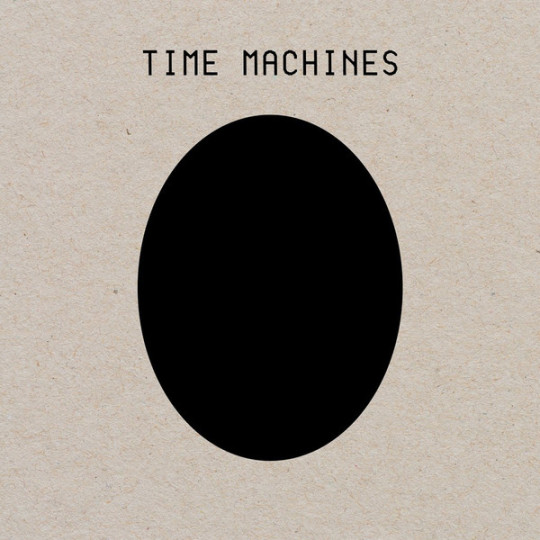
Time Machines – Time Machines [1998; Eskaton]

image

With Coil’s only full release for their Time Machines side-project (excepting a set of live material, which was later folded into a live album under Coil’s own name), the group builds four droning tone studies adding up to an hour, with each bearing the name of a drug that the track was apocryphally intended to evoke not just in mood, but in effect.  The set opens with “7-Methoxy-β-Carboline: (Telepathine)“, which grows from a quiet start to a slow but definite pulse, with timbre vibrations as the synths slide up and down in their registers introducing minor but persistent alterations to the base tone until they develop into a distinct counter-wave, then merge with the main tone to fade to a compromised warble drift.

“2,5-Dimethoxy-4-Ethyl-Amphetamine: (DOET/Hecate)“ follows, bringing a sharper edge to its tone-cycling, with rumbling dissonance bleeding through into the low end of the wave.  As the track continues, that roughness gradually shifts to the fore of the loop, balancing out the whole of it into a wash of subdued grinding.  “5-Methoxy-N,N-Dimethyl: (5-MeO-DMT)“, the shortest of the tracks, comes next, with a tingling crest brought down to firmer grounding as the modulation continues.  This one shows the most pronounced manipulation, with regular pushes of the tone interference building something like a melody in their sinking and rising against the bassy throbbing.

Lastly comes “4-Indolol,3-[2-(Dimethylamino)Ethyl],Phosphate Ester: (Psilocybin)“, the longest track, quickly settles into a low-end wave cycle while shimmery high-pitched counter-beat pulses before giving way to firmer mid-register tone bars, and eventually pressuring out into even higher, almost inaudible twinkling above the groaning bass stirring.

The commitment to the music’s styling is perhaps the most striking quality of the album when considered as a whole, but the small details which come with every minute of the music provide more to savor.  There’s also a lightness to the tracks which is often absent from the relative popularization (and commonly metal-flavored rendering) of drone in the decades following Time Machines’ release.  The success of the songs in effecting their time transportation mission vary not just from person to person, but also with each listening, depending on environment, willingness to focus on the audio to the exclusion of other stimuli, and so on.  But the richness of detailing allows for many returns, and by letting the listener’s chosen level of commitment determine their engagement, it provides an interactive audio experience, whether supplemented by drugs of a more physical sort or not.  One of Coil’s most mystical releases, both in spite and because of its simplicity.

Mike Young – Turn That Fucking Music Up! [1998; Donna Lee Records]

image

On the first of the two EPs released to accompany his only album, Mike Young pulls three tracks from the LP and throws in one exclusive as a bonus.  The first three songs (”This Is Rock ‘n’ Roll”, “Trippin with Dick”, and “Mr. Babalu”) explore the cool, tropical-tinged big beat of the album, sliding and overlaying breaks while riding a firm main rhythm, and jotting in vocal samples and extra polishes of percussion and keyboards wherever space allows.  The last track, “Lay It on the Floor”, laces retro bossa nova into techno trills and psychedelic electronica, with authoritative speech samples provide the title and chorus.  Solid throughout, and lots of fun.

bôa ‎- Duvet [1998; Polystar]

image

In the first song of this single,
“Duvet”, bôa

play an easy-going but lightly unhappy bit of late-’90s alt rock with a glaze of electronic texturing, letting the vocals and drums take the forefront while the rest simmers until pulling forward for the bridge.  The B-side, “Deeply”, amplifies the guitar’s presence while the vocals take on a more confrontational edge and the drums move to a jazzier, popping tightness of rhythm.  A light but enjoyable pair, with some nice but subtle details to their production.

Eels – Electro-Shock Blues [1998; DreamWorks Records]

image

In Eels’ second album, the depression of their first is turned up sharply, with songs about dying on a bathroom floor, going to funerals, going insane, and eating hospital food filling the ~50-minute run-time.  Also changed is the clarity of their alt-rock style, with blurred textures, submersive mixing, and mumbled lyrics traded between overwhelmed electronics and submissive acoustics.  Lullaby-like bridges, interludes, and build-ups lend things a regular sense of drifting away that pairs well with the album art, and the balancing act between detachment and despair ends up providing the driving force behind much of the music.

Despite the weight of pessimism and regret present through pretty much the entire album, front-man Mark Everett manages to avoid seeming overwhelmed by his morose indulgences.  It tends to feel knowingly directed, even in the most down-cast points, and the numerous little production touches (e.g., brief twittering of birds, a moment of wind instruments, music-box under-points, etc.) indicate a careful molding of the material to its final form.