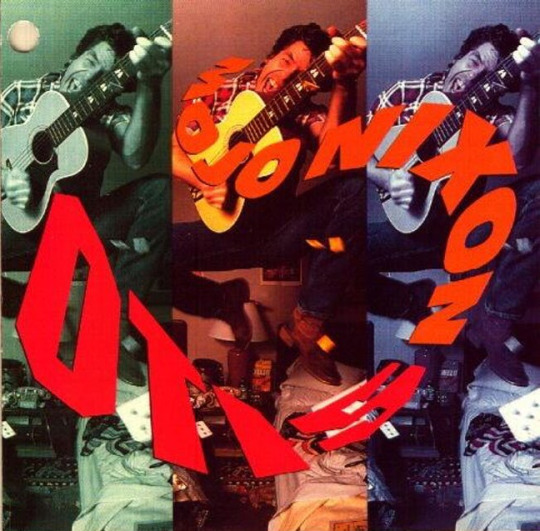
Mojo Nixon – Otis [1990; Enigma Records]

image

Starting off with a call for the extermination of lawyers (”Destroy All Lawyers”) and proceeding through songs about monster trucks, drinking, and the star-spangled banner, the music of this album puts its rockabilly style to use in playful mocking and celebration of scuzzy Americana.  Tracks like “Rabies Baby” and “Perry Mason of Love” feature tongue-in-cheek crooning, while changes to society are called for, beyond the opening track, in tunes like “Put a Sex Mo-Sheen in the White House” and “Don Henley Must Die”.

The traditional guitar/bass/drums and vocals set-up are put to good work, and for all the bluster in attitude and sound, the songs are put together with solid melodic and rhythmic bases.  Hooky riffs flow right into the earworm choruses, and while the whole thing has an undeniable layer of country-fried coating, swings into other styles (like the Caribbean flavoring in “Perry Mason of Love”) help keep the base from being stretched too thin.  At the same time, the refusal to settle into seriousness at any point across the album tints it with a novelty record vibe, but that off-center spin does fit the music’s energy and presented attitude.

Jane’s Addiction – Ritual de lo Habitual [1990; Warner Bros. Records]

image

The third album from Jane’s Addiction is a mix of single-friendly grungy alternative rock (“Stop!”, “Been Caught Stealing”) and psychedelic prog (”Three Days”, “Classic Girl”), with the mixtures shifting freely across the nine tracks.  Spurting ethical positions, ruminating on personal memories, reacting to outside interests, and spinning focused stories, the lyrics are taken wherever front-man Perry Farrell feels like going, and the sprawling coverage fits together with an uncanny ease, thanks in no small part to the unifying and distinctive personality he projects over it all.

On the musical side, the band makes thorough use of studio production possibilities, with multi-tracked and overlapping vocals, sharp mixing (deployed to excellent high/low contrast in the ~11-minute “Three Days”), lush and varied treatments of the guitar timbre, shifting of the bass prominence in the mixing, and playful twists of the percussion.  Through all of the layering and escalations, the emotional core is kept earnest and clear, if a bit sardonic at times, and it aims for just as wide a range as the surrounding instrumentation.  A keystone album of the ‘90s, and the best of the band’s LPs.

Here’s the alternate cover art, used for stores which wouldn’t stock the original.

image

Carl Stalling – The Carl Stalling Project (Music From Warner Bros. Cartoons 1936-1958) [1990; Warner Bros. Records]

image

Curating cuts from just over two decades of musical work by composer Carl Stalling on (primarily) Looney Tunes cartoons, this compilation provides an informative tour through his creatively playful approach to scoring the animations.  From evocatively conveying characters and their movements through to the instruments, to riffing on standards and popular songs of the time (including the employment of ‘musical puns’, tying in a couple of bars from a song with a title that could be linked to the on-screen action), Stalling’s work is lively, innovative, and downright fun.

The inclusion of uncommon instrumentation (like the incorporation of studio sirens into musical passages, a ‘singing’ kazoo for a chicken, or rhythmically-staggered laughter) makes for even more distinctively outré arrangements, though it always feels earnestly in service of the music, rather than just being there for extra energy or weirdness. 
A few moments of background studio chatter add some sense of the recording atmosphere for the musicians and conductor,

and while some of the cues meant to evoke world regions (e.g., “Chopsticks” for China) haven’t aged as well as the rest of the music, the large majority of the scores hold up fantastically, even removed from the context of their cartoons.